The best air source heat pump for your home is the one that's correctly sized and well installed. That said, a handful of manufacturers dominate UK installations, and each has strengths worth knowing about before you get a quote.
How an air source heat pump works
An air source heat pump works by pulling heat from the outside air with a fan and refrigerant in the outdoor unit, compressing it to raise the temperature, and passing it into your central heating system and hot water cylinder. Good units produce three to four units of heat for every unit of electricity, which is why the best air source heat pumps are so energy efficient. More in how a heat pump works.
What to look for in an air source heat pump
- Efficiency (SCOP): the seasonal coefficient of performance. Higher is cheaper to run; 3.5 or more at a 45°C flow temperature is good.
- Refrigerant: R290 (natural, very low global warming potential) or R32. R290 units can reach higher flow temperatures.
- Noise: check the sound power level; quieter units make siting easier.
- Warranty: typically 7 to 10 years when fitted by an approved installer.
- Controls: weather compensation and a good app make a real difference to running costs.
Popular air source heat pump brands in the UK
Vaillant heat pumps (aroTHERM plus)
The Vaillant aroTHERM plus uses R290 natural refrigerant and is available in a range of sizes for flats through to large detached homes. It can reach high flow temperatures, which helps in older homes, and Vaillant has a large UK installer network.
Mitsubishi Electric heat pumps (Ecodan)
The Ecodan range is one of the most widely installed in the UK and includes R290 models. Mitsubishi has a long track record in heat pumps and a strong network of accredited installers.
Daikin heat pumps (Altherma)
Daikin's Altherma range covers standard and high-temperature models, including newer R290 units. Daikin is one of the world's largest heating and cooling manufacturers.
Samsung heat pumps (EHS Mono)
Samsung's EHS Mono monobloc units, including R290 versions, are known for compact design and smart controls through the SmartThings app.
Viessmann heat pumps (Vitocal)
Viessmann's Vitocal air source heat pumps include R290 models with a focus on quiet operation and premium build quality.
Grant heat pumps (Aerona)
Grant's Aerona range is popular with installers in off-gas areas, especially for homes switching from oil.
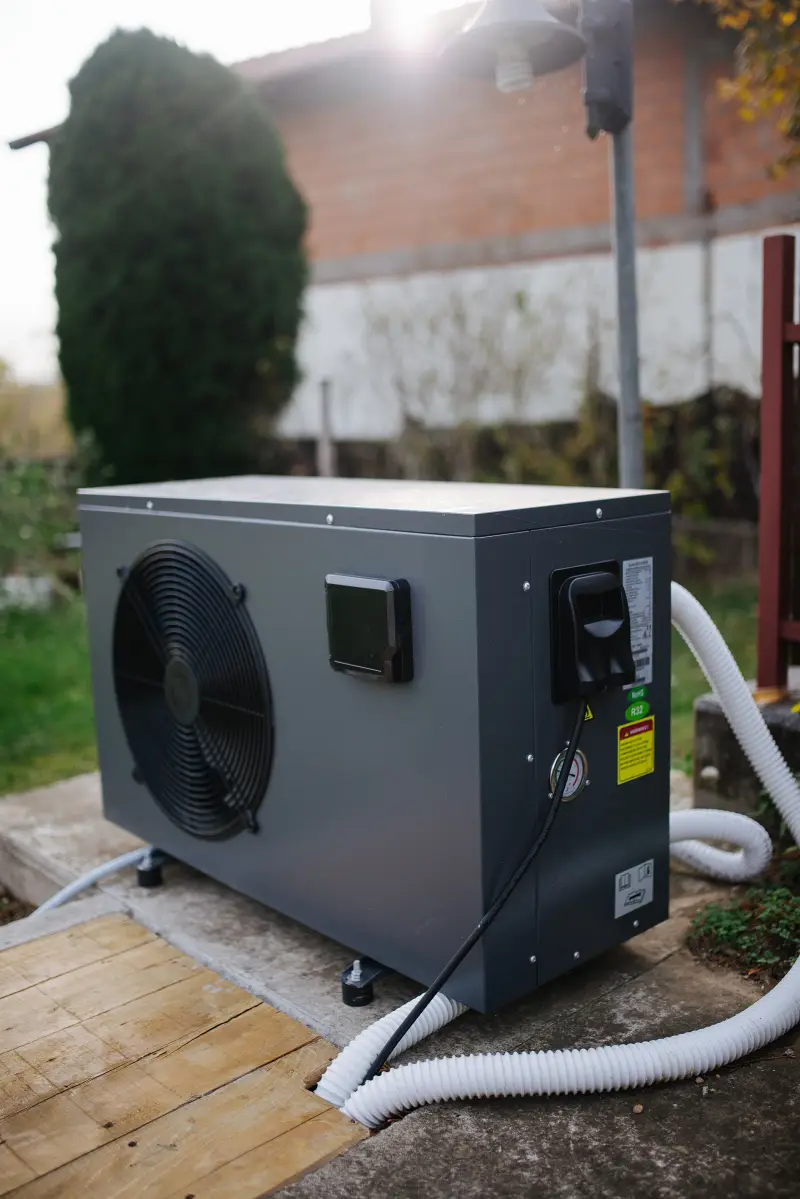
Monobloc, split and air to air heat pumps
- Monobloc: all the refrigerant stays in the outdoor unit, which sends heated water into the house. The most common choice for UK homes, and the simplest air source heat pump installation.
- Split: a refrigerant circuit runs between the outdoor unit and an indoor unit. Useful where space outside is tight.
- Air to air heat pumps: blow warm (or cool) air into rooms. They don't provide hot water and aren't covered by the full £7,500 grant, so for replacing a boiler, air to water units are the usual choice. See air to air heat pump grants.
Radiators or underfloor heating?
Every brand above works with radiators and with underfloor heating. Underfloor heating is ideal because it runs at low temperatures, letting air heat pumps reach their best efficiency. With radiators, your installer checks each room and may upsize a few so they deliver enough heat at a lower flow temperature.
Choosing the right size heat pump
Most UK homes need a heat pump between 5 and 12 kW. Your installer works out the right size from a room-by-room heat loss calculation. A properly sized heat pump runs steadily and efficiently; an oversized one cycles on and off and costs more to run. Get a free survey and quote and your installer will recommend a brand and model for your home.
Installation costs for the best air source heat pumps
Brand affects the price less than the size of your home and how much of your central heating system needs changing. Typical air source heat pump installation costs are £8,000 to £16,000, including the outdoor unit, hot water cylinder, controls and labour, before the £7,500 grant. Premium and high-temperature models sit at the top of that range. See our air source heat pump cost guide for prices by house size.
Brand comparison at a glance
| Brand and range | Refrigerant | High-temperature option | App control |
|---|---|---|---|
| Vaillant aroTHERM plus | R290 | Yes, up to 75°C | myVAILLANT |
| Mitsubishi Electric Ecodan | R32 and R290 models | Selected models | MELCloud |
| Daikin Altherma | R32 and R290 models | Yes, high-temperature range | Daikin Onecta |
| Samsung EHS Mono | R32 and R290 models | Selected models | SmartThings |
| Viessmann Vitocal | R290 models | Selected models | ViCare |
| Grant Aerona | R32 models | Selected models | Smart controls |
Model ranges change regularly, so ask your installer for the current specification and warranty of the exact unit they recommend.
Environmentally friendly refrigerants
The refrigerant inside a heat pump matters for the environment if it ever leaks. R290 (propane) is a natural refrigerant with a global warming potential of about 3, while R32 sits at around 675. Both are far better than older refrigerants, but R290 units are the most environmentally friendly choice and are becoming standard across the leading brands.
Air source heat pump systems vs ground source heat pumps
Most of these manufacturers also make ground source heat pumps, which collect heat from pipes in the garden. They're slightly more efficient in winter but cost two to three times as much to install. For most homes, air source heat pump systems give the best balance of cost and performance, and both qualify for the £7,500 Boiler Upgrade Scheme grant. See ground source vs air source.
Noise levels
Check the sound power level in the specification. Most modern units sit around 50 to 60 dB(A) sound power, which works out at roughly the level of a quiet conversation a few metres away. Quieter units make siting easier near bedrooms or neighbours, and every installation needs an MCS noise assessment.
Warranties
Standard manufacturer warranties are usually two to five years, extended to seven or ten years when the unit is fitted by an accredited installer and serviced every year. Ask what the warranty covers (parts, labour or both) and what servicing it requires.
Questions to ask your installer about brands
- Why do you recommend this brand and model for my home?
- Are you accredited by the manufacturer, and does that extend the warranty?
- What SCOP will it achieve at my home's design flow temperature?
- Which refrigerant does it use?
- Where will the outdoor unit go, and how loud will it be at my neighbour's window?
How to choose between brands
Once you've shortlisted two or three brands, compare them on the things that affect your home day to day:
- Efficiency at your flow temperature: ask for the SCOP at 35°C and 45°C, not just the headline figure.
- Size range: make sure the brand has a unit that matches your home's heat loss, rather than one that's too big.
- Footprint and looks: some outdoor units are slimmer or quieter, which matters in small gardens and terraces.
- Controls: a clear app with energy monitoring makes it far easier to keep running costs down.
- Local support: a brand your installer fits regularly will be easier to service and repair.
Hot water performance
All of these heat pumps heat a stored hot water cylinder rather than providing instant hot water like a combi boiler. The cylinder is usually matched to the heat pump brand, and sized for your household, typically 150 to 300 litres. Units that reach higher flow temperatures can heat water faster and to a higher temperature, which helps larger families. Ask your installer how long the cylinder takes to reheat after a bath or several showers.
Our verdict
Any of the brands above can heat a UK home well and cheaply when the system is properly designed. Rather than chasing a single best brand, choose an MCS-certified installer you trust, who carries out a full heat loss survey and recommends a model sized for your home. That decision makes far more difference to comfort and running costs than the logo on the outdoor unit.
Sources
Grant amounts, VAT rules and eligibility are set by government and the scheme administrators. We check them against these primary sources:
- Microgeneration Certification Scheme (MCS)
- Find an MCS certified installer (MCS)
- Apply for the Boiler Upgrade Scheme (GOV.UK)
- VAT on energy-saving materials and heating equipment (VAT Notice 708/6) (GOV.UK)
New to the jargon? See the heat pump glossary, or browse the heat pump FAQs.