How does a heatpump work? (It's usually written as two words, "heat pump", but the question is the same.) An air source heat pump works like a fridge in reverse. A fridge moves heat out of its inside to keep food cold; a heat pump moves heat from the air outside your home into your heating system. Even at 0°C, outdoor air holds plenty of heat energy, and a heat pump can capture it down to around -20°C.
The basics
The outdoor unit contains a large fan, a heat exchanger and a compressor. The fan draws outside air over coils filled with refrigerant, which absorbs the air's heat. The compressor squeezes the refrigerant to raise its temperature, and that heat is passed into the water that flows through your radiators, underfloor heating and hot water cylinder.
The refrigeration cycle, step by step
- Evaporation. Outdoor air passes over the evaporator. The cold liquid refrigerant inside boils into a gas at very low temperatures, absorbing heat from the air.
- Compression. An electrically powered compressor pressurises the gas, sharply increasing its temperature.
- Condensation. The hot gas passes through a heat exchanger, giving its heat to your heating water and condensing back to a liquid.
- Expansion. An expansion valve lowers the pressure and temperature of the liquid, ready to absorb heat again. The cycle repeats continuously.
Why air source heat pumps are so efficient
The electricity a heat pump uses goes into moving heat, not creating it. That's why a typical system delivers 3 to 4 kWh of heat for every 1 kWh of electricity: an efficiency of 300 to 400%. The best gas boilers manage around 90%.
Heat pumps are most efficient when they heat water to lower temperatures (around 35 to 50°C) for longer, rather than blasting radiators at 70°C for short bursts like a boiler. That's why your installer may recommend some larger radiators and why a heat pump home feels evenly, gently warm all day.
COP and SCOP: measuring heat pump efficiency
A heat pump's efficiency is measured by its coefficient of performance (COP): the units of heat it delivers for each unit of electricity at a given moment. A COP of 4 means 4 kWh of heat from 1 kWh of electricity. Because COP changes with the weather, installers also quote a seasonal coefficient of performance (SCOP), the average over a whole year. A good air source heat pump has a SCOP of 3 to 4, which makes it one of the most energy efficient ways to heat a home.
Air-to-water vs air-to-air heat pumps
- Air-to-water heat pumps connect to a wet central heating system (radiators or underfloor heating) and a hot water cylinder. They directly replace a boiler, and they're the type covered by the £7,500 Boiler Upgrade Scheme grant.
- Air-to-air heat pumps blow warm (or cool) air into rooms through indoor units. They don't provide hot water.
What gets installed in your home
- The outdoor unit, on a wall bracket or ground pad, with space around it for airflow.
- A hot water cylinder and, sometimes, a small buffer tank.
- An indoor control unit or hydrobox, depending on the model.
- Controls: a thermostat or app, with weather compensation that adjusts the water temperature to the weather outside.
- Any radiator upgrades identified in your heat loss survey.
Heat pump vs air conditioner
An air conditioner is a heat pump that only runs one way: it moves heat out of a room. A heating heat pump runs the same refrigeration cycle in reverse, moving heat into your home. Many air to air heat pumps can do both, heating in winter and cooling in summer, while air to water heat pumps are designed mainly to heat radiators and hot water.
High temperature heat pumps
Most heat pumps are most efficient at flow temperatures of 35 to 50°C. High temperature heat pumps, often using R290 refrigerant, can reach 70 to 75°C, similar to a gas boiler. That can mean fewer radiator upgrades in older homes, although running at high temperatures is less efficient, so a good installer still designs for the lowest flow temperature that keeps every room warm.
How ground source heat pumps differ
Ground source heat pumps work on exactly the same principle, but collect heat from pipes buried in the garden or in a borehole instead of from the air. The ground stays at around 10°C all year, so they're slightly more efficient in winter, but they cost far more to install. See ground source vs air source heat pumps.
Installing a heat pump
Installing a heat pump starts with a survey and room-by-room heat loss calculation by an MCS-certified installer. They size the heat pump, plan the hot water cylinder and any radiator changes, and fit the system in 2 to 4 days. The £7,500 Boiler Upgrade Scheme grant is deducted from the cost. Read what to expect from an installation.
Heat pump vs a traditional heating system
A traditional heating system, such as a gas, oil or LPG boiler, burns fuel to make heat. Even the best boiler turns only about 90% of the fuel's energy into warmth. A heat pump doesn't burn anything: it moves heat that already exists in the outside air, so it delivers three to four units of heat for each unit of electricity it uses.
| Air source heat pump | Gas boiler | |
|---|---|---|
| How it makes heat | Moves heat from outside air | Burns gas |
| Efficiency | 300 to 400% | 85 to 92% |
| Flue or gas supply | Not needed | Needed |
| Typical flow temperature | 35 to 50°C | 60 to 75°C |
| Lifespan | ~20 years | 10 to 15 years |
Heat pumps and your carbon footprint
Heating is the biggest part of most UK homes' carbon footprint. Switching from a gas boiler to an air source heat pump typically cuts heating emissions by around 70%, and by more if you're replacing oil or LPG. As more of the UK's electricity comes from wind and solar, the carbon saving from a heat pump grows every year, with no change needed at home.
What a heat pump does through the day
- Overnight: it heats the hot water cylinder, often on a cheaper tariff.
- Morning and evening: it runs steadily to keep rooms at a comfortable temperature, rather than blasting heat for a short burst.
- Milder afternoons: weather compensation lowers the flow temperature, so it uses less electricity.
- Cold, damp spells: it runs short, automatic defrost cycles to keep the outdoor coil clear of frost.
Common heat pump myths
- "They don't work in the cold." They work down to about -20°C. Read do air source heat pumps work in winter?
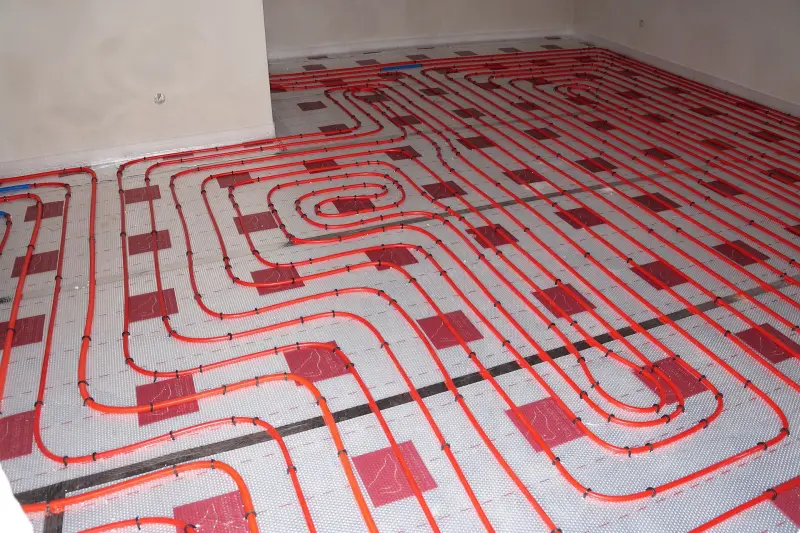
- "You need underfloor heating." Radiators work too; some may simply need to be larger.
- "They're noisy." Modern units are about as loud as a fridge at one metre.
- "They're only for new builds." Most heat pumps in the UK are fitted to existing homes, including Victorian terraces.
Do heat pumps need much maintenance?
Very little. A heat pump has no flame, no flue and no gas supply, so there's no annual gas safety check. An annual service is still recommended: the engineer checks refrigerant pressures, cleans the filters and the outdoor coil, inspects the controls and makes sure the system is running at its best efficiency. Between services, all you need to do is keep the outdoor unit clear of leaves, snow and anything that blocks the airflow. A well-maintained air source heat pump lasts around 20 years, longer than a typical gas boiler.
Sources
Grant amounts, VAT rules and eligibility are set by government and the scheme administrators. We check them against these primary sources:
- Microgeneration Certification Scheme (MCS)
- Apply for the Boiler Upgrade Scheme (GOV.UK)
- Heat pumps: planning permission (Planning Portal)
New to the jargon? See the heat pump glossary, or browse the heat pump FAQs.