Do air source heat pumps work in winter? Yes. The good news is that a modern air source heat pump keeps working in temperatures down to around -20°C, much colder than a typical British winter. Air source heat pumps are the main form of home heating in much of Norway, Sweden and Finland, where the winter months are far harsher than ours, and they're increasingly common across the UK.
So yes, heat pumps work in cold weather, and they can fully replace a traditional heating system such as a gas or oil boiler. That doesn't mean winter makes no difference. Colder weather affects heat pump efficiency, running costs and how the system needs to be designed. Below we explain how heat pumps work in winter, what to expect during the colder months, and how to make sure your home's heating stays reliable when temperatures drop.
How do air source heat pumps work in winter?
Even freezing air contains heat energy. An air source heat pump captures it using a refrigerant that boils at very low temperatures, well below -20°C. Here's the cycle in winter:
- Collect: a fan draws cold outdoor air across a coil. The refrigerant inside absorbs heat from it and turns into a gas, even when it's below freezing outside.
- Compress: an electric compressor squeezes the gas, which raises its temperature sharply.
- Deliver: the hot refrigerant passes its heat to the water in your heating system, warming your radiators, underfloor heating and hot water cylinder.
- Repeat: the refrigerant cools, expands and goes back outside to collect more heat.
Because the heat pump moves heat rather than burning fuel to create it, it delivers more heat energy than the electricity it uses, even in winter. For the full explanation, read how an air source heat pump works.
How cold does it get in a UK winter?
Much less cold than most people think. Average UK winter temperatures sit at around 4 to 7°C, and the MCS design temperatures installers use for most of the country are only a few degrees below freezing. Even during cold snaps, temperatures rarely approach the -15 to -20°C limit of modern heat pumps. A UK winter is well within what an air source heat pump is designed for.
Heat pump efficiency in colder weather
Heat pump efficiency is measured as a coefficient of performance (COP): how many units of heat you get for each unit of electricity. It does fall as the outdoor temperature drops, because there's less heat in the air to collect and the heat pump has to work harder. But it stays well above what any traditional gas boiler can achieve.
| Outdoor temperature | Typical heat pump COP | Heat per 1 kWh of electricity |
|---|---|---|
| 12°C (mild autumn day) | 4.5 to 5 | 4.5 to 5 kWh |
| 7°C (average winter day) | 3.5 to 4.5 | 3.5 to 4.5 kWh |
| 2°C (cold winter day) | 3 to 3.5 | 3 to 3.5 kWh |
| -5°C (cold snap) | 2 to 3 | 2 to 3 kWh |
| Gas boiler, any weather | 0.85 to 0.92 | 0.85 to 0.92 kWh |
Typical figures for a modern air to water heat pump at a 35 to 45°C flow temperature. Your installer will quote a seasonal efficiency (SCOP) that averages performance across the whole year, usually 3 to 4.
So even on the coldest days of the year, an air source heat pump produces two to three times more heat from each unit of energy than a gas boiler gets from the fossil fuel it burns.
Defrost cycles: why heat pumps steam in winter
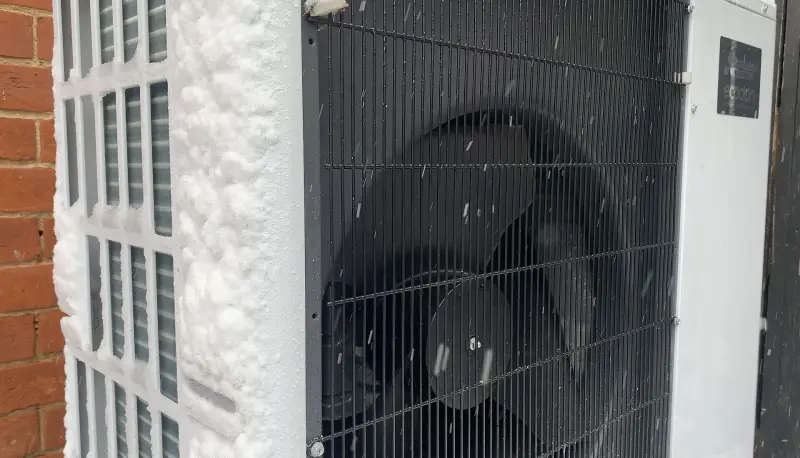
When it's cold and damp, typically between about -5°C and 5°C with high humidity, frost can build up on the outdoor coil. The heat pump detects this and runs a short defrost cycle, briefly reversing to warm the coil and melt the ice. You might see steam rising from the unit and hear it change sound for a few minutes.
This is completely normal. Defrost cycles are automatic, usually last a few minutes, and your radiators stay warm because the system has stored heat in the water. Good installers site the unit so meltwater drains away freely and can't refreeze on a path.
Will my home stay warm in winter with a heat pump?
Yes, as long as the heating system is designed properly. That comes down to five things:
- Correct sizing. Your installer carries out a room-by-room heat loss calculation and sizes the heat pump for the coldest expected day in your area, not an average day. This is part of every MCS air source heat pump installation.
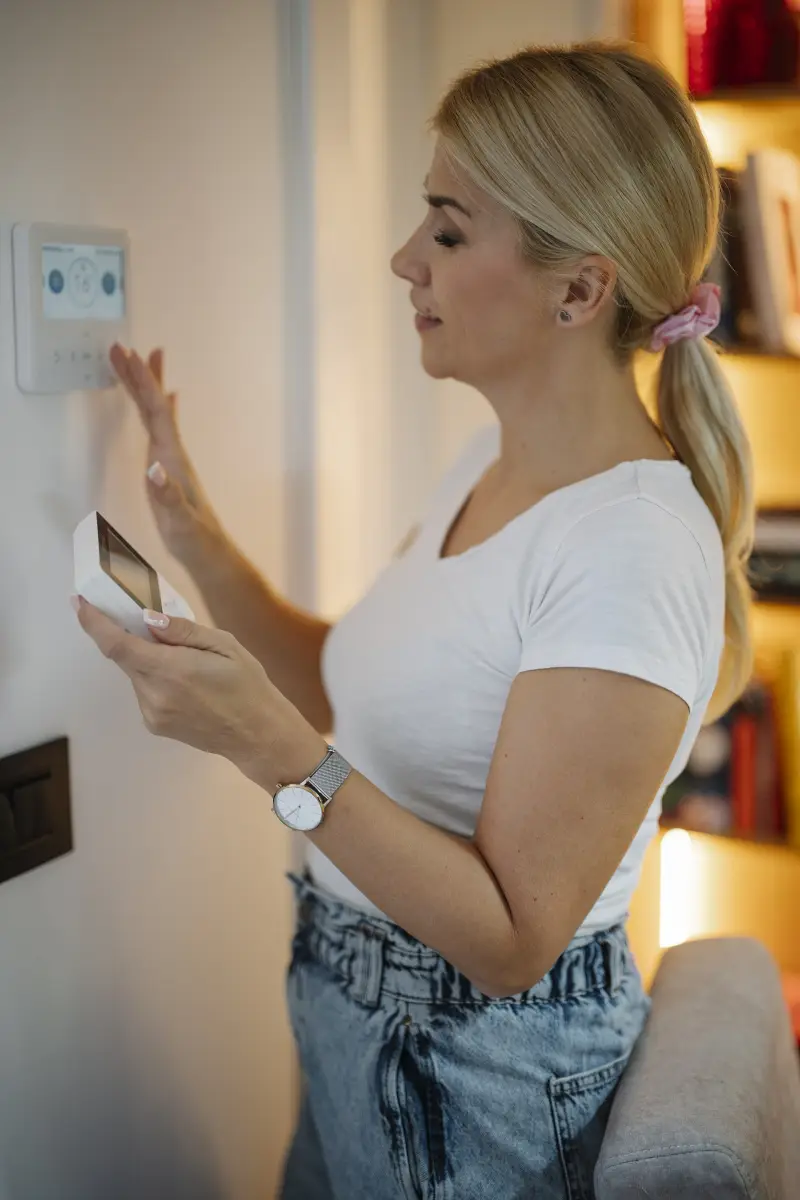
- Weather compensation. This control raises the flow temperature as the weather gets colder and lowers it on milder days, so the house stays at the same temperature without wasting energy.
- Radiators sized for lower temperatures. Heat pumps run radiators cooler than a boiler, so some rooms may need a larger radiator to stay warm through the colder months.
- Steady running. Heat pumps are most efficient left on at a constant temperature, rather than switched on and off like a gas boiler.
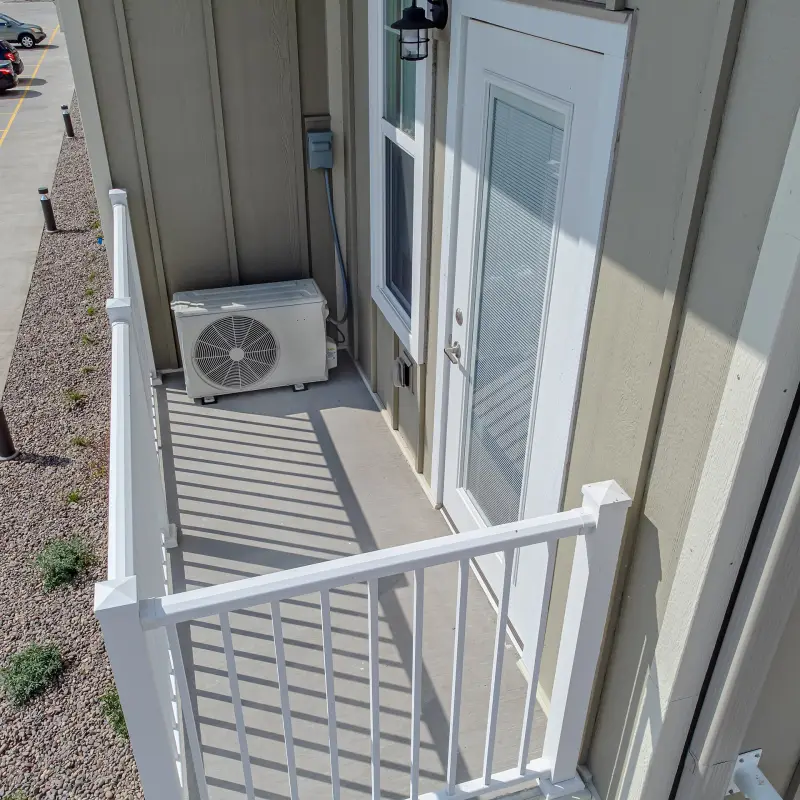
- Clear airflow. Keep the outdoor unit free of snow, leaves and anything that blocks the fan.
Large UK field trials have found heat pumps can work in every type of British home, from Victorian terraces to flats, including through winter cold snaps. Get these basics right and a heat pump provides reliable heating all winter.
Heating and hot water in winter
An air to water heat pump provides both your heating and hot water. In winter it heats the hot water cylinder, usually once or twice a day, typically during cheaper off-peak hours if you're on a heat pump tariff. The cylinder holds enough hot water for a family's showers and baths, so you won't run short on cold mornings. Most cylinders also have an immersion heater as a backup and for the weekly legionella cycle.
What does a heat pump cost to run in winter?
Running costs are higher in winter, because your home needs more heat and the heat pump works slightly harder. For a typical three-bedroom home:
| Day | Standard tariff (25p/kWh) | Heat pump tariff (15p/kWh avg) |
|---|---|---|
| Cold winter day | £3.50 to £5.00 | £2.10 to £3.00 |
| Mild winter day | £1.50 to £2.25 | £0.90 to £1.35 |
| Year-round average | ~£2.36 | ~£1.41 |
A heat pump tariff with cheaper off-peak rates makes the biggest difference in winter. See our full guides to heat pump running costs per day and heat pump tariffs.
Air source heat pumps vs traditional gas boilers in winter
A gas boiler's efficiency barely changes with the weather, but it never gets above about 92%: you always get less than one unit of heat for each unit of gas you burn. A heat pump's efficiency does drop in winter, but it still delivers well over 200% on the coldest days. Heat pumps also run more steadily, so many owners find their homes feel more evenly warm in winter than with a boiler, which cycles hot and cold. Compare the two in our heat pump vs gas boiler guide.
Do ground source heat pumps work in winter?
Yes. Ground source heat pumps collect heat from pipes buried in the garden, where the ground stays at roughly 10°C all year. That means their efficiency drops less in winter than an air source heat pump's. The trade-off is cost: a ground source system typically costs £20,000 or more to install, against £8,000 to £16,000 for air source, before the £7,500 grant. For most UK homes, air source gives the better value. See ground source vs air source heat pumps.
Five tips for running your heat pump in winter
- Leave it on. Set a steady temperature rather than turning the heating off overnight or when you go out.
- Trust weather compensation. Let the controls adjust the flow temperature rather than turning the thermostat up.
- Heat water off-peak. Schedule the hot water cylinder for the cheapest hours on your tariff.
- Keep the unit clear. Brush off heavy snow and clear leaves from around the fan and coil.
- Book an annual service before winter, so the system is running at its best for the colder months.
The bottom line
So, do air source heat pumps work in winter? Absolutely. They're designed for far colder conditions than a British winter, and a properly sized and installed system keeps your home warm and supplies hot water all year round. Efficiency drops a little in colder weather, but a heat pump still produces two to three times more heat per unit of energy than a traditional gas boiler, while cutting your home's heating emissions by around 70%.
Want a heat pump that's ready for winter? Our 60-second eligibility check connects you with an MCS-certified installer who will size your system for the coldest days in your area, and claim the £7,500 Boiler Upgrade Scheme grant for you.
Sources
Grant amounts, VAT rules and eligibility are set by government and the scheme administrators. We check them against these primary sources:
New to the jargon? See the heat pump glossary, or browse the heat pump FAQs.
Written by the GetASHP team. Prices and grant details checked 27 October 2026; always confirm current figures with your installer.