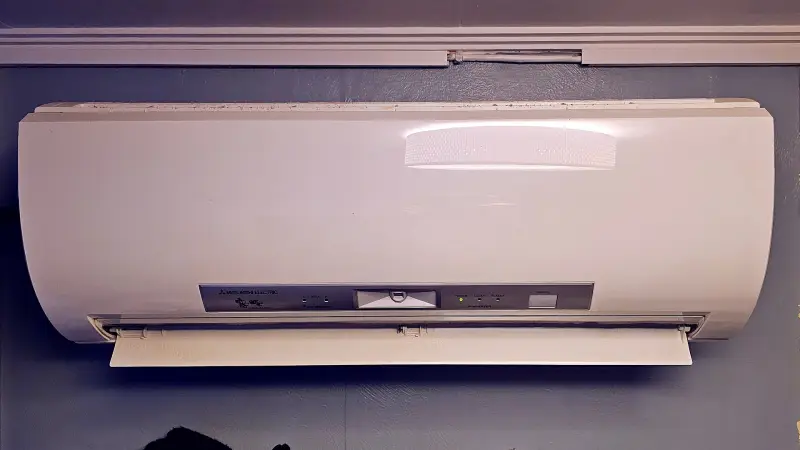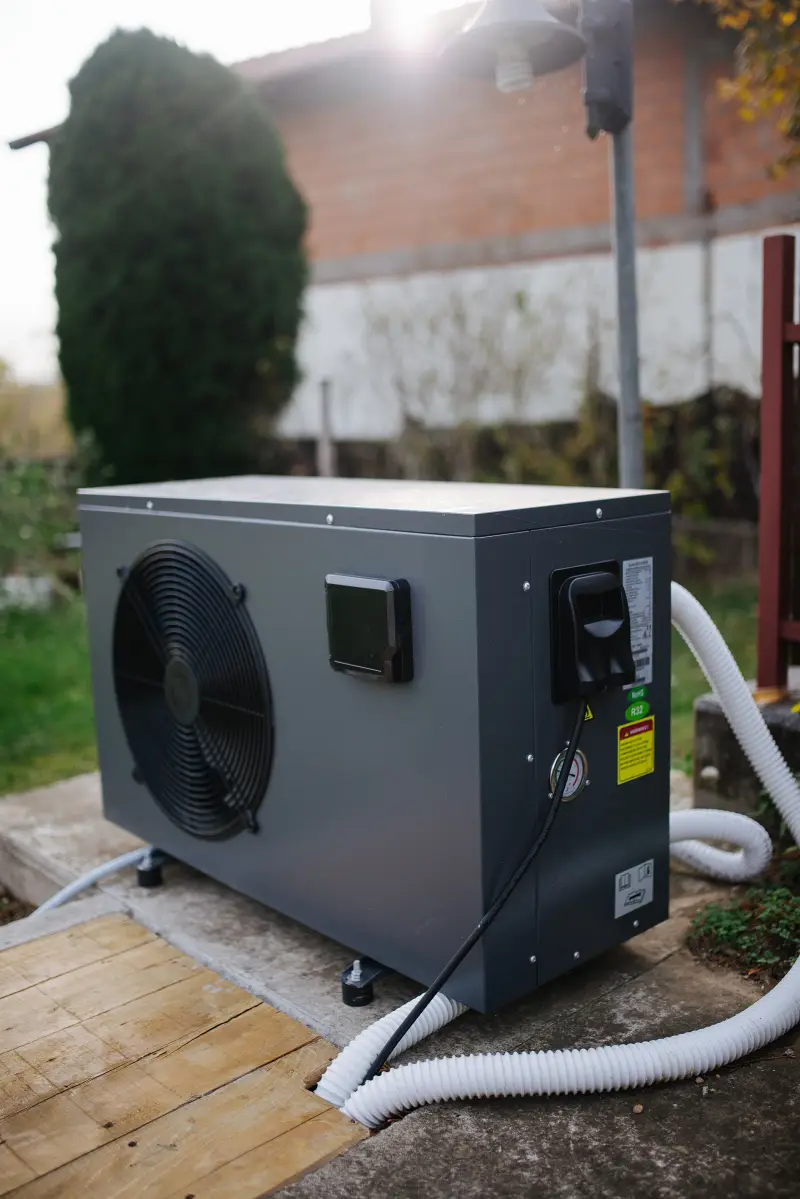
An air to water heat pump takes heat from the outside air and transfers it into water, which then circulates through your radiators or underfloor heating and heats a hot water cylinder. It's a direct replacement for a gas, oil or LPG boiler, and it's the type of heat pump covered by the £7,500 Boiler Upgrade Scheme.
How an air to water heat pump works
- A fan draws outdoor air over a heat exchanger containing refrigerant.
- The refrigerant absorbs heat and evaporates, even when it's well below freezing outside.
- A compressor raises its temperature.
- A second heat exchanger passes that heat into your central heating water.
Our step-by-step guide to how heat pumps work goes into more detail.
Monobloc vs split air to water heat pumps
| Monobloc | Split | |
|---|---|---|
| Refrigerant | Sealed in the outdoor unit | Piped between outdoor and indoor units |
| Indoor equipment | Cylinder and controls | Indoor hydrobox, cylinder, controls |
| Installation | Simpler, any heating engineer with MCS | Needs F-gas qualified engineer |
| Common in UK? | Very | Less so |
Air to water vs air to air
An air to air heat pump heats rooms by blowing warm air through indoor units, like air conditioning in reverse. It can't heat hot water and needs a separate solution for that. An air to water system heats both your rooms and your hot water through your existing pipes, which is why it's the usual choice for replacing a boiler.
What does an air to water heat pump cost?
Most homes pay £8,000 to £16,000 installed before the grant, or roughly £1,500 to £8,000 after the £7,500 Boiler Upgrade Scheme deduction. See the full cost breakdown.
Is my home suitable?
Most homes with a wet central heating system are. You need outdoor space for the unit, somewhere for a hot water cylinder, and radiators that can heat each room at a lower flow temperature (some may need upgrading). An installer confirms all of this in a free survey.
Sources
Grant amounts, VAT rules and eligibility are set by government and the scheme administrators. We check them against these primary sources:
- Apply for the Boiler Upgrade Scheme (GOV.UK)
- Microgeneration Certification Scheme (MCS)
- VAT on energy-saving materials and heating equipment (VAT Notice 708/6) (GOV.UK)
New to the jargon? See the heat pump glossary, or browse the heat pump FAQs.
Written by the GetASHP team. Prices and grant details checked 23 October 2026; always confirm current figures with your installer.