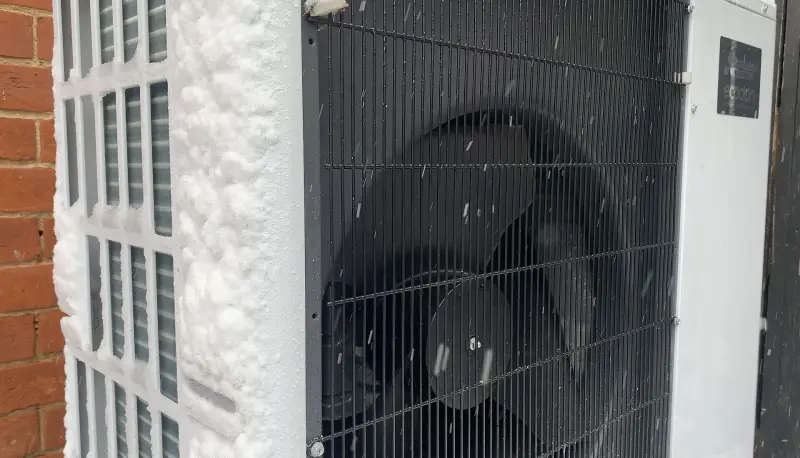
Most UK houses can run a heat pump well. The question isn't usually whether a heat pump will work in your home, but what needs to be in place for it to run efficiently. Here's how to tell.
The quick suitability checklist
- Outside space for a unit about the size of a large suitcase, with clear airflow.
- Room for a hot water cylinder, or a place one could go.
- A wet central heating system (radiators or underfloor heating).
- Reasonable insulation: loft insulation and draught-proofing at least.
- Ownership, or the owner's permission if you rent.
Heat pumps by house type
Detached houses
Usually the easiest installs: plenty of outdoor space and room for a cylinder. Larger homes need a bigger unit, typically 8 to 14 kW.
Semi-detached houses
The most common UK heat pump install. A 6 to 8 kW unit typically suits a three-bed semi, and many need only a couple of radiators upgrading.
Terraced houses
Units usually go in the rear garden or yard. Wall-mounted brackets help where space is tight, and the MCS noise assessment checks the distance to neighbours.
Bungalows
Bungalows are often well suited, with space for a unit and a cylinder. Loft insulation makes a big difference in single-storey homes.
Flats
Possible with somewhere to site the outdoor unit and the freeholder's consent. Smaller heat demand means a compact unit.
What about older or solid-wall homes?
Older homes lose more heat, so they need a carefully sized system and sometimes larger radiators. Simple steps like loft top-ups, draught-proofing and secondary glazing reduce the size (and cost) of the heat pump needed.
Next step
Answer six questions in our eligibility check and an MCS-certified installer will confirm suitability with a free survey.
Sources
Grant amounts, VAT rules and eligibility are set by government and the scheme administrators. We check them against these primary sources:
- Heat pumps: planning permission (Planning Portal)
- Find an energy certificate (EPC) (GOV.UK)
- Apply for the Boiler Upgrade Scheme (GOV.UK)
- Microgeneration Certification Scheme (MCS)
New to the jargon? See the heat pump glossary, or browse the heat pump FAQs.
Written by the GetASHP team. Prices and grant details checked 23 October 2026; always confirm current figures with your installer.